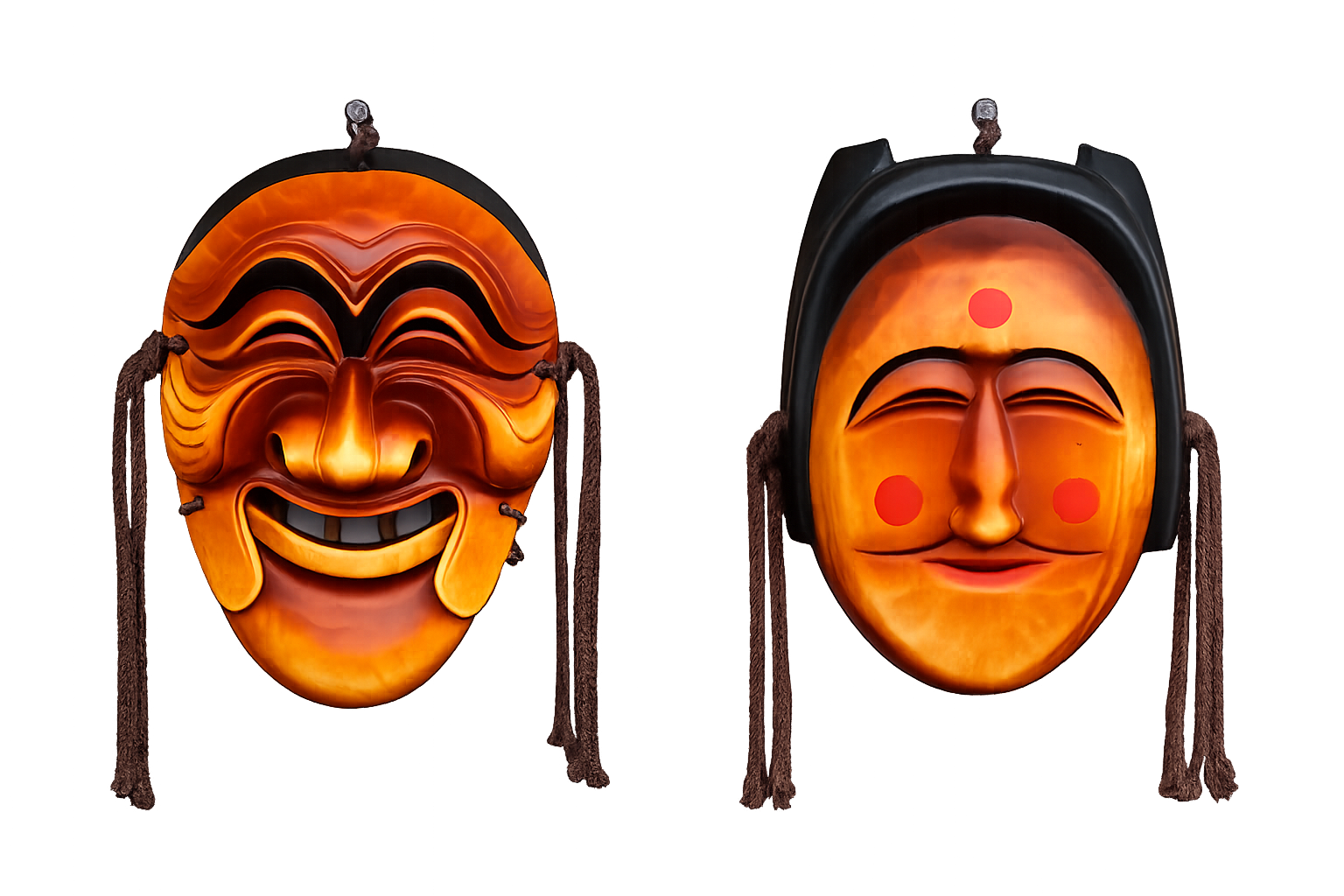

The Unspoken Context
Another Way of Reading Korean Society
Why Do Misunderstandings Seem to Repeat in Korea?
※ This essay is a personal record based on observations by a Korean who has spent many years living abroad, looking back at Korean society through the distance created by time and place. Korean society appears in diverse forms depending on region, generation, and environment, and the perspective presented here does not claim to represent all Koreans.
Foreign residents in Korea often describe a similar sense of confusion. Questions like “Why don’t people speak more directly?” or “Why does everything feel so collective?” are not uncommon.
These misunderstandings are not always rooted in personal bias or cultural prejudice. They often arise from a difference in how everyday life is organized and understood.
Many things in Korean society tend to work without being spelled out. Rules and expectations are not always stated clearly in words. Instead, they are often shared quietly through relationships and situational awareness.
From the outside, this context is rarely visible. What remains are the actions themselves—observed without the explanations that usually accompany them. This essay looks at what sits inside those unspoken spaces, through ordinary scenes and the choices that shape them.
1. The Pause
When Honesty Follows a Different Rule
To some foreign observers, Koreans may appear hesitant or indirect. Silence in a meeting can be read as uncertainty or avoidance.
Yet a pause does not always mean there is nothing to say. It can be a moment spent considering when an opinion should be voiced, and how it might land without unsettling the room.
In lower-context societies, spoken words carry most of the message. When people come from many different backgrounds, immediate disagreement is often understood as a challenge to an idea—not to the person presenting it. Timing matters less than clarity.
In Korea, however, words tend to arrive with their surroundings. Who speaks, when they speak, and where they speak can matter as much as what is said. A direct objection in a formal setting may be read not as discussion, but as a disruption of balance or respect.
From this perspective, honesty does not always mean speaking as soon as a thought appears. It can mean finding a way to express sincerity without damaging the relationship that holds the conversation together. What looks like restraint is often a different standard at work.
2. Staying Together
Leaving Is Not Permission, but Reassurance
Group dinners or team gatherings often surprise foreign visitors. People stay longer than expected. Leaving early sometimes comes with an explanation.
From the outside, this can look like pressure or a lack of personal freedom. Why should departure need justification once the work is done?
One way to read this scene is through an orchestra. If a violinist were to leave the stage as soon as their part was finished, the performance would feel unsettled—even if the music continued. Staying, in this sense, signals continuity rather than obedience.
When someone offers a reason for leaving, it is not always an apology. It can function as a quiet message: the connection remains intact, even in absence.
For much of modern Korean history, formal systems of protection—contracts, legal safeguards, institutional security—were not always reliable. In such conditions, the most dependable form of support came from people who knew you: family ties, shared schools, regional connections.
Choosing relationships over strict individual freedom was not simply habit. It was a form of insurance, built through presence and recognition. That logic still echoes in everyday behavior.
3. Speed
Not Urgency, but Omitted Steps
Korea’s fast pace is often described as relentless. Quick steps, short exchanges, and the familiar phrase “hurry up” are easily interpreted as signs of pressure.
Yet speed does not always come from anxiety. It can also emerge when many assumptions are already shared.
Compared with manual-driven systems, work in Korea often proceeds with minimal instruction. Tasks are completed smoothly even when detailed guidelines are absent. People move by reading the situation rather than following written steps.
What disappears is not care, but explanation. The process shortens because much of it is already understood.
This efficiency can feel excluding to newcomers, and it is not without its problems. Still, it is often less about competition than about reducing friction—less talking, fewer emotional collisions, less time spent clarifying what everyone already senses.
Insight: A Society in Transition
Between Relationships and Systems
This unspoken context is changing.
Older generations, shaped by periods when institutional protection was weak, often continue to rely on relationships as their primary safeguard. Those habits were learned as survival skills and carried forward into daily life.
Younger generations, raised within more stable legal and social systems, tend to trust rules and contracts more than personal ties. Lengthy explanations for leaving work can feel unnecessary, even inefficient.
These are not strict divisions. They are overlapping tendencies, visible in moments of friction and adjustment.
What emerges is a new grammar—one that leans closer to lower-context thinking while still moving within older patterns.
Closing
This essay does not seek to defend Korean culture, nor to correct foreign perspectives. It simply traces the space between visible actions and the intentions that quietly shape them.
Korea today stands at the intersection of two orders: one rooted in long-standing relational logic, the other guided by transparent systems and formal rules.
What foreign observers often encounter is not contradiction, but transition. And in that transition, these everyday moments begin to speak for themselves.