※ This essay is a personal record based on observations by a Korean who has spent many years living abroad, looking back at Korean society through the distance created by time and place. Korean society appears in diverse forms depending on region, generation, and environment, and the perspective presented here does not claim to represent all Koreans.
I’ve heard newcomers to Korea say something similar. Daily life seems to run on fixed rails. Before long, they sense when the streets will fill, when they’ll empty again, and which behaviors feel natural—or strangely out of place. They’re not wrong.
You don’t see this order right away. No one issues loud instructions. Signs don’t explain every situation. And yet, people tend to move in the same directions, at similar speeds, getting through the day as if following an unspoken agreement.
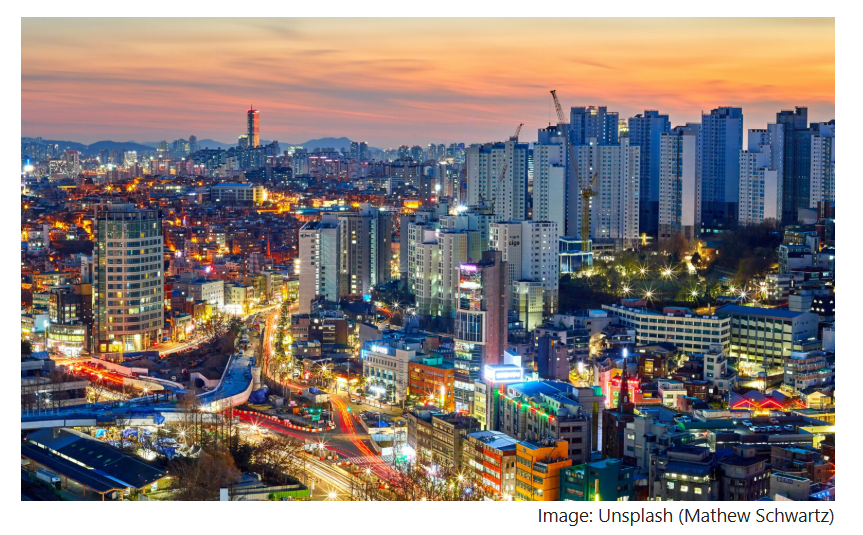
The morning subway in large cities like Seoul or Busan offers a clear glimpse of this hidden framework. Where people line up, how they step aside as doors open, the timing of giving up a seat—these movements repeat with surprising consistency. No one reads from a rulebook, but most people try not to mess up the flow. In spaces this crowded, what keeps things moving isn’t a visible system of control but a shared sense shaped by repetition.
The same pattern shows up in residential life. Late-night noise, trash disposal times, the quiet distance people keep inside elevators—people learn these habits long before they ever check the official rules. People often step back instinctively, careful not to cross a line that might unsettle others. As these small acts pile up, everyday life falls into a recognizable pattern.
This framework didn’t form overnight. For a long time, urban life in Korea unfolded within limited space, with many people living close together. Dense housing, rapid urban growth, and a strong sense of shared responsibility made predictability necessary. Standards that didn’t need to be spoken, signals that required no explanation—these gradually worked their way into daily routines.
This hidden framework stands out more clearly when you compare it to another society. After living in Europe for years, I realized how differently people handle public spaces. In Korea, people draw their own lines—”I probably shouldn’t do this”—even when there’s no rule against it. In many Western settings, people think differently: if it isn’t clearly forbidden, it’s probably fine. It’s not about right or wrong. They reflect different balances between individual freedom and consideration for others. What feels relaxed and open to someone used to Europe can look disorderly to a long-term resident of Korea, while Korea’s sense of order may feel reassuring to some and suffocating to others.
From the outside, this looks rigid. Choices seem limited. The society appears weighed down by too many rules. But for those who live within it, the experience is often more nuanced. The framework feels less like coercion than a quiet agreement to avoid burdening one another. Some describe it as a system that clarifies not what you must do, but what you don’t need to do.
Of course, this hidden order isn’t always comfortable. At times it presses in, leaving little room to breathe. Those who step outside it may encounter cool glances or subtle disapproval. Even within the same society, generations and individuals relate to it differently. Still, much of daily life continues with remarkably little friction, held together by a structure that’s both loose and firm at once.
For this reason, urban life in Korea often looks neatly arranged as it passes by. The day holds together less by explicit rules than by shared understandings. Once this hidden framework comes into view, everyday movements start to read differently. At that point, it stops being something you analyze—it becomes a landscape unfolding in front of you.