
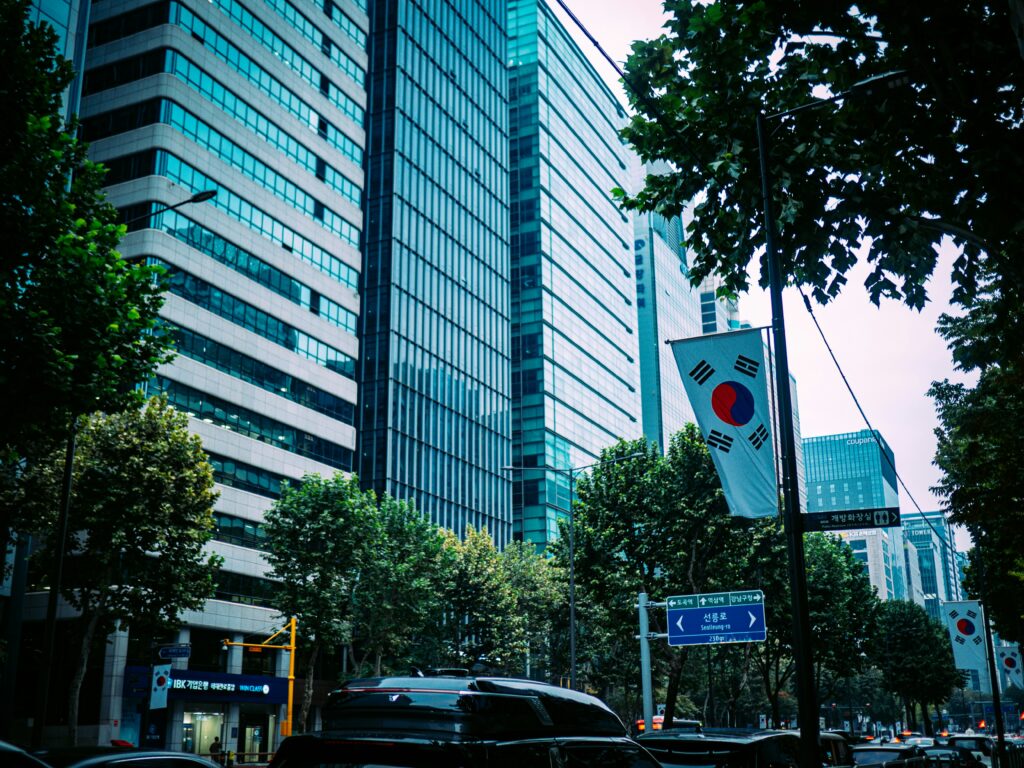
Image: Unsplash (greg-willson)
Why Korean Workplace Culture Is Often Misunderstood
Beyond the silence between the meeting room and the hallway
※ This essay is a personal observation by a Korean who has lived abroad for many years, looking back at Korean society through the distance of time and geography. Perspectives vary by generation and industry, and what follows is one lens through which to observe a shifting landscape.
First-time observers of Korean workplaces tend to notice the same patterns.
The heavy air in meeting rooms. The outsized weight a manager’s words seem to carry. The long hours that blur the line between work and life.
For those raised in cultures that prioritize personal autonomy and direct feedback, these scenes can feel jarring, sometimes even uncomfortable. There is truth in these impressions. Yet they often remain as isolated snapshots. What gets lost is the context—the historical and social reasons these scenes came to exist. The surface is visible, but the background slips past unnoticed.
The temperature inside and outside the meeting room
Picture an afternoon meeting in a traditional Korean office.
The air is still. People speak sparingly, and when they do, they follow a visible line of seniority. Heads nod. Notes are taken. But sharp, public disagreement is rare. To someone from a culture where speaking one’s mind signals competence and sincerity, this silence can feel passive, even frustrating. Why does no one say, “I disagree”? Why does the path to a decision feel so indirect?
But the moment the meeting ends, the scene changes.
In the hallway or over coffee, conversations begin to flow. Ideas held back inside the room quietly surface. Someone works out how to actually implement the manager’s instructions. Someone else suggests a workaround to a flaw noticed earlier. Only then does the difference in temperature between inside and outside the meeting room become clear. Silence, it turns out, is rarely empty.
Still, this is not the whole story.
Sometimes silence is a strategic choice—people waiting for the right moment. At other times, it reflects the limits imposed by hierarchy. The fact that people speak more freely in the hallway does not mean the difficulty of speaking up in the boardroom is not real.
A survival strategy reaching its expiration date
To an outsider, rigid hierarchy and long working hours can look like nothing more than oppressive habits. Seen on their own, they often do. But when the conditions that shaped them are placed alongside these scenes, the picture becomes more complex.
Between the 1960s and 1990s, Korea compressed its industrial growth into just a few decades. Results had to be delivered at breakneck speed, with little room for failure. In that environment, strictly dividing roles and aligning responsibility in a single direction worked as a survival strategy. It helped organizations hold together under intense pressure.
For an earlier generation, these clear lines provided predictability amid uncertainty. Understanding this history, however, is not the same as justifying the present. What once helped organizations survive raises a different question today: does it still serve the creativity and flexibility now required?
A changing present, and tensions that remain
Korean society today is moving across this old landscape with visible strain.
A younger generation of workers is questioning the collective efficiency that once defined success, asking instead for creativity, autonomy, and mutual respect. Startups and technology firms experiment with English names in place of titles, flexible working hours, and flatter communication structures.
Change, however, does not move evenly. In large corporations and public institutions, traditional hierarchies remain firmly in place. There is a constant tension between those pressing for a new way of working and systems that hesitate to let go of familiar structures.
Beyond simple judgment
When Korean workplace culture is viewed from the outside, discussion often stops at whether it is good or bad. What gets overlooked is movement. These structures are not static habits frozen in time. They are systems that once held organizations together and are now being tested by new expectations.
Understanding past context does not excuse present problems. “It was necessary back then” should not become a reason to delay change. The more useful question may be whether a different balance is possible—one that allows individual creativity and organizational stability to coexist.
Misunderstanding often begins with judgments made too quickly. If one lingers a little longer, other layers appear. Calculations that move ahead of words. A sense of responsibility that precedes emotion. And alongside them, the pressure from a younger generation pushing against inherited limits.
Only then does this culture stop being a simple target for criticism. It becomes a layered landscape, shaped by different generations and different times, each pulling in its own direction.
And that landscape continues to shift—
sometimes slowly, sometimes with resistance,
but never entirely still.
Reader’s note
The workplace culture described here reflects primarily traditional large corporations and public institutions. Not all Korean workplaces follow this pattern. Startups, technology firms, and foreign-owned companies often operate very differently, and experiences vary widely by industry, company size, and generation.