Korea’s Unspoken Social Order
When Actions Speak Before Words
※ This essay is a personal reflection based on observations by a Korean who has lived abroad for many years, viewing Korean society from a distance shaped by time and place.
Korean society varies widely across regions, generations, and social contexts, and the perspective presented here does not claim to represent all Koreans.
A Rhythm That Flows Without Being Spoken
Spending time in Korea, you begin to notice moments where movement seems to arrive before language. On a subway platform, when someone starts to line up, a queue forms without instruction. Inside a crowded elevator, people step aside without being asked, as if they already know who is getting off.
These moments are so ordinary that they rarely draw attention. Yet when you pause and look more closely, a shared awareness appears to be running quietly beneath them. It feels less like a set of agreed rules and more like a pattern learned through repetition, something that settles into the body over time.
Some cultural studies describe Korea, along with several other Asian societies, as a high-context culture. In such settings, meaning often emerges through situation and shared understanding rather than explicit words. This framework, outlined by anthropologist Edward T. Hall in Beyond Culture (1976), has been applied not only to Korea, China, and Japan, but also to parts of the Middle East and Southern Europe. In many discussions, Korea is frequently cited as a place where nonverbal cues and situational awareness play an important role in everyday communication.
From my own experience, this way of interacting sometimes changes how conflict takes shape. Rather than appearing immediately through clear statements, tension may be adjusted through timing, tone, or restraint. At moments, it seems to soften friction before it fully surfaces. At the same time, when clarity is needed, this reliance on context can create misunderstanding. It may also feel unfair when unwritten customs quietly take precedence over formal rules. Strengths and limitations tend to grow from the same ground.
Nunchi: Between Consideration and Quiet Pressure
At the center of this rhythm lies a sensibility often called nunchi. It feels less like a personality trait and more like a learned social awareness—an ability to read expressions, atmosphere, and the emotional temperature of a situation before anything is said.
In societies where hierarchy was once more clearly defined, this sensitivity appears to have played a meaningful role. As rapid industrialization and urbanization unfolded in the mid-20th century, it likely became more layered and complex. In periods of limited resources and rapid change, the ability to sense unspoken currents seems to have helped people adapt within organizations and communities.
This sensibility has two sides. It can appear as careful consideration for others, yet in some situations it is felt as an unspoken pressure to remain silent. In many everyday scenes I observed, warmth aimed at maintaining group balance existed alongside a quiet tension about not standing apart from it.
When Silence Becomes a Choice
In meetings, a pause before speaking rarely signals an absence of thought. More often, it feels like a moment spent weighing what effect those words might have. In these situations, knowing when not to speak can matter as much as knowing what to say.
There are moments when indirect language is chosen over direct expression, or when keeping relationships steady takes precedence over reaching a quick conclusion. From the outside, this can appear hesitant or lacking conviction. Yet from what I have experienced, such silence is often deliberate—a way of preventing escalation, or a decision to wait and observe. In these moments, silence is not simply emptiness. Sometimes it is a choice.
Ground That Is Slowly Shifting
These patterns, of course, are not fixed. In technology companies, startups, and global organizations, more direct forms of communication are increasingly visible. In environments that aim for flatter structures, clear language and open feedback often carry greater weight, and in some workplaces low-context communication has become more familiar.
Still, it is difficult to explain these changes solely through generational difference. Even within the same generation—or within the same person—communication shifts depending on context. At times, reading the room feels more effective. At others, clarity in words becomes essential. From where I stand, Korean society seems to be feeling its way toward a new balance, somewhere between shared, unspoken understanding and efficiency without misunderstanding.
Understanding What Shapes These Behaviors
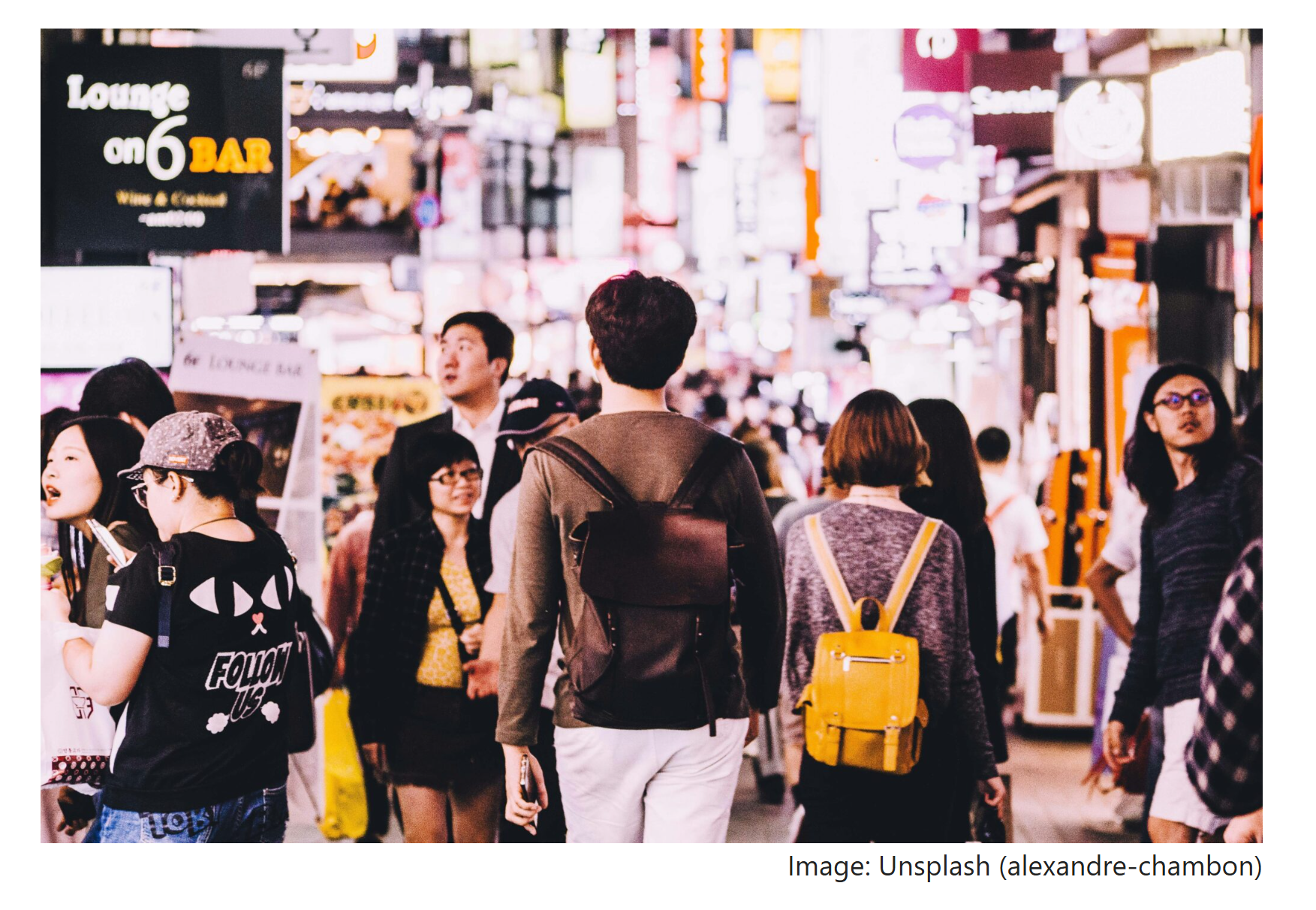
Everyday behavior in Korea feels less like a sum of individual personalities and more like the result of layered historical conditions and repeated social experience. When people instinctively slow their pace because someone ahead has stopped on a crowded street, that small gesture seems to carry more than efficiency or silence. It reflects ways of adapting together through uncertain time.
Looking at where such behaviors took root, and how that ground is now meeting new values, opens a different view. When you step back, everyday life in Korea begins to appear not as a single cultural quirk, but as a textured landscape shaped by accumulation and change.